How to Use ChatGPT for Cover Letters in 2026 (Without Sounding Like AI)
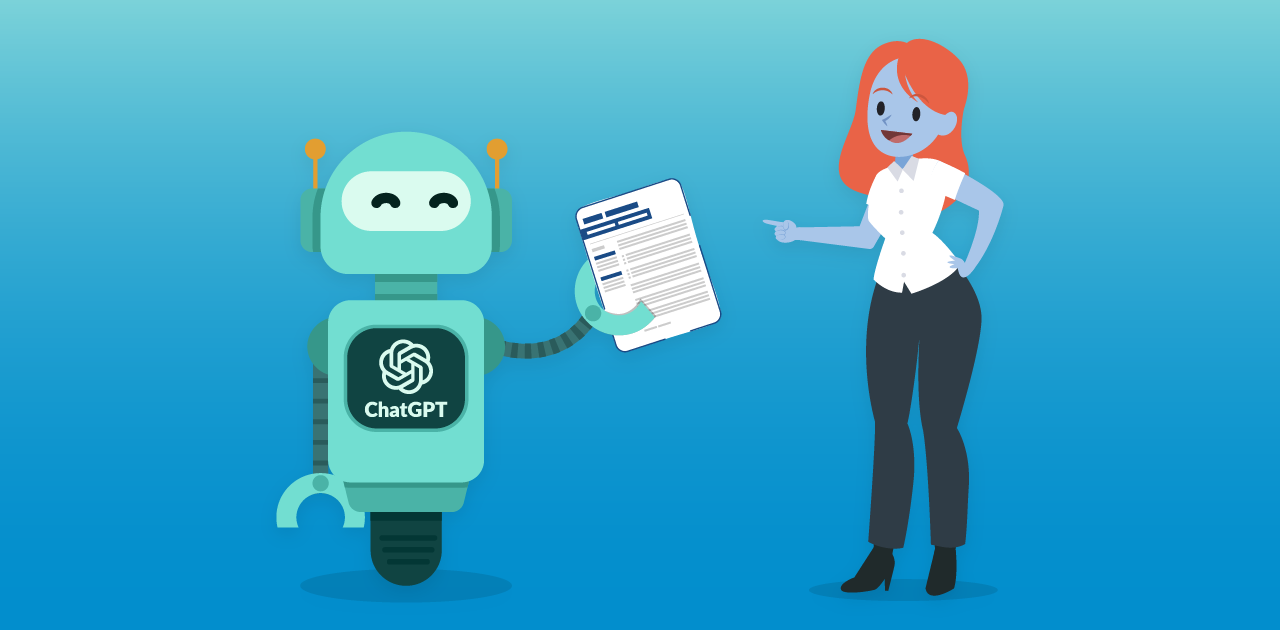
Artificial intelligence has become a permanent part of the modern job search. Today, job seekers use tools like ChatGPT to brainstorm ideas, refine their writing, tailor applications, and prepare for interviews more efficiently than ever before.
When used correctly, ChatGPT can help you create more compelling cover letters, identify relevant skills from job descriptions, overcome writer's block, and communicate your value more clearly to employers. It can also support other parts of your job search, including creating resumes, preparing for job interviews, and optimizing your professional presence online.
However, the most successful candidates are not using AI to replace their own experience, personality, or achievements. They are using it as a writing assistant and career tool that helps them work smarter and tailor their applications more effectively.
In this guide, you'll learn how to use ChatGPT to create better cover letters, avoid common AI-writing mistakes, and ensure your application still sounds like you.
By combining your own experience with AI-powered assistance, you can spend less time struggling with wording and more time focusing on what matters most: finding the right opportunities and securing more interviews.
TL;DR: Using ChatGPT for cover letters
- ChatGPT can help you write cover letters faster, improve clarity, and tailor your application to specific job opportunities.
- The quality of the output depends entirely on the quality of the information and prompts you provide.
- Always use the job description, your resume, relevant achievements, and career goals as inputs.
- Never submit AI-generated content without reviewing, editing, and personalizing it.
- Recruiters can often identify generic AI-written applications that lack specificity and genuine experience.
- The most effective cover letters combine AI assistance with real achievements, measurable results, and authentic motivation.
- ChatGPT may generate inaccurate information or make assumptions about your background, so every fact should be verified.
- Use ChatGPT as a writing assistant and brainstorming partner—not as a replacement for your own expertise, experience, or voice.
- AI can improve how you communicate your value, but it cannot replace the unique experiences that make you a strong candidate.
Can ChatGPT write a cover letter?
Yes. ChatGPT can generate a complete cover letter in seconds. However, the strongest cover letters are rarely the ones written entirely by AI. The best results come from using ChatGPT to refine, personalize, and strengthen your writing while ensuring the final application reflects your own experience, achievements, and motivations.
ChatGPT is an AI-powered language model that can analyze information, generate text, and respond to detailed instructions known as prompts. For job seekers, this makes it a valuable tool for brainstorming ideas, improving wording, tailoring applications to specific job descriptions, and overcoming writer's block.
Rather than asking ChatGPT to write an entire cover letter from scratch, use it as a writing assistant. By providing your resume, relevant achievements, and the job description, ChatGPT can help you identify key themes, highlight transferable skills, and communicate your value more effectively to employers.
When used correctly, ChatGPT can save significant time during your job search and help you create more targeted applications. However, AI-generated content should always be reviewed, edited, and fact-checked before submission. Recruiters are increasingly familiar with AI-written applications and can often identify cover letters that rely too heavily on generic language or lack personal insight.
The most successful job seekers use ChatGPT to enhance their applications—not replace the human experience behind them.
Should you use AI to write your cover letter?
Yes—but with the right expectations.
AI tools like ChatGPT can be incredibly useful when you're writing a cover letter. They can help you get started faster, improve your wording, and tailor your application to a specific job. For many job seekers, AI is especially valuable for overcoming writer's block and turning ideas into a clear, professional cover letter.
Used correctly, ChatGPT can help you:
- Write your first draft faster
- Improve grammar and readability
- Create a stronger structure
- Identify relevant skills from a job description
- Tailor your cover letter to a specific employer
- Communicate your experience more effectively
However, AI is not a shortcut to a perfect cover letter.
ChatGPT does not know your career story, achievements, motivations, or personality unless you provide them. If you rely too heavily on AI-generated text, your cover letter can quickly become generic and sound similar to dozens of other applications.
There are also some risks you should be aware of:
- Generic wording that fails to stand out
- Invented achievements or inaccurate information
- AI hallucinations and factual errors
- A lack of personality and authenticity
- Recruiters recognizing AI-generated language
The best cover letters combine the strengths of AI with the strengths of the candidate. Use ChatGPT to improve your writing, organize your thoughts, and tailor your application—but make sure the final version reflects your own experience, achievements, and voice.
Remember: employers are not hiring ChatGPT. They are hiring you.
3 steps to creating better cover letters with ChatGPT
A common mistake is asking ChatGPT to write an entire cover letter and submitting the result with minimal changes. This often leads to generic applications that fail to differentiate you from other candidates.
Try these three steps for your next cover letter:
1. Give ChatGPT the right information
The quality of your cover letter depends on the quality of the information you provide. ChatGPT can only work with the context you give it, so the more specific your input, the better the result.
Include information such as:
- The job title
- The company name
- The job description
- Your relevant work experience
- Key achievements and measurable results
- Relevant skills and qualifications
- Why you are interested in the role
- Any specific points you want included
Rather than asking ChatGPT to "write a cover letter," provide enough detail for it to create a tailored draft that reflects your background and the employer's requirements.
For the best results, include both the job advertisement and information from your resume.
Example prompt
Instead of using a short prompt, try something more detailed:
Act as an experienced recruiter. Write a personalized cover letter for a Marketing Manager position at Konxion.
Requirements:
- Highlight my 8 years of marketing experience
- Include measurable achievements where relevant
- Emphasize campaign planning, copywriting, and social media advertising
- Explain how my experience can create value for the company
- Keep the tone professional and natural
- Avoid clichés and generic phrases
- Limit the cover letter to 400 words
Here is the job description:
[Paste job description]
Here is my resume:
[Paste resume]
Don't be afraid to regenerate the response several times. Different outputs can help you discover stronger wording, better examples, or new ways of presenting your experience.
2. Review and personalize the result
This is the most important step.
Even the best AI-generated cover letter should be treated as a first draft. Review every section carefully and ensure that the information accurately reflects your experience, skills, and achievements.
Pay particular attention to:
- Facts and dates
- Job titles
- Responsibilities
- Results and achievements
- Company-specific details
ChatGPT may occasionally invent information or make assumptions about your background. Always verify the content before using it.
You can also use follow-up prompts to improve the draft further:
- Give an example of how I used problem-solving skills as a [job title].
- Explain how my previous experience prepares me for this position.
- Describe how I can contribute to the growth and success of [company name].
The goal is to make the cover letter sound like you—not like ChatGPT.
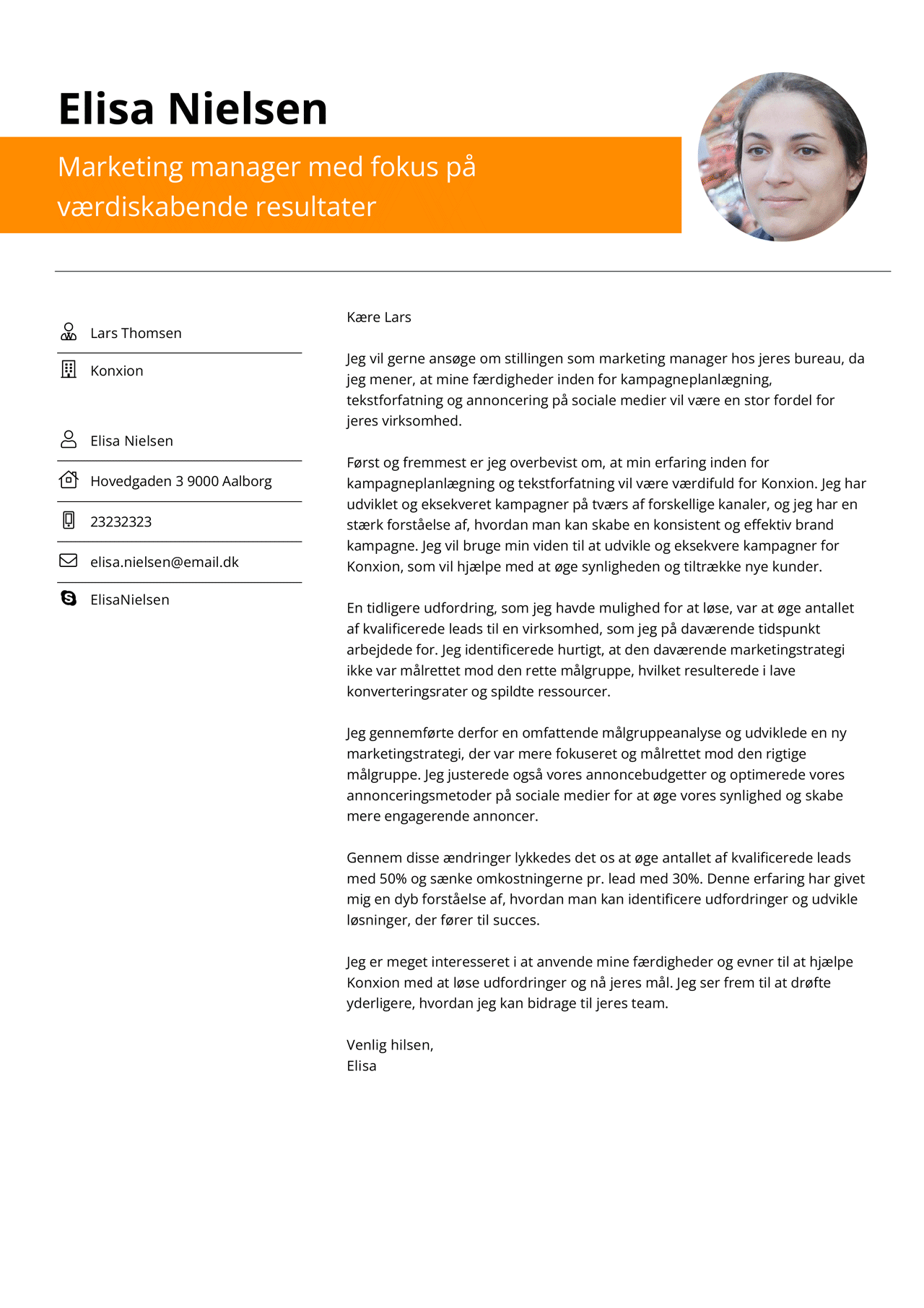
3. Format your cover letter professionally with Jofibo's cover letter tool
Once you are satisfied with the content, transfer the text into a professional cover letter template.
A well-written cover letter can lose impact if it is poorly formatted or difficult to read. Using a structured template ensures your application looks professional and is easy for recruiters to review.
Simply copy your finalized text into your preferred Jofibo cover letter template and pair it with your resume.
Copy-and-paste cover letter prompt template
Use this template as a starting point:
Write a cover letter for a position as a [job title] at [company].
The cover letter should explain why I am interested in the role and how I can contribute value to the company.
I have [number of years] years of experience in [industry].
Include measurable achievements where relevant and use strong action verbs.
Highlight the following skills:
- [Skill 1]
- [Skill 2]
- [Skill 3]
Use a professional and natural tone.
Avoid generic phrases and AI-sounding language.
Keep the cover letter under 400 words.
Here is the job description:
[Paste job description]
Here is my resume:
[Paste resume]
Other useful ChatGPT prompts for cover letters
Writing a complete cover letter is only one way to use ChatGPT during your job search. In many cases, ChatGPT is even more valuable when used to improve, refine, and tailor an existing draft.
Here are some useful prompts you can use:
Tailor a cover letter
Use this prompt when you already have a cover letter but want to customize it for a specific role.
Tailor my cover letter to the following job description. Highlight the most relevant skills and experience, and explain how my background aligns with the company's requirements. Keep the tone professional and natural.
Job description:
[Paste job description]
Cover letter:
[Paste cover letter]
Improve a cover letter
Use this prompt to strengthen your wording and make your application more persuasive.
Review my cover letter as if you were a recruiter. Suggest improvements to clarity, structure, impact, and professionalism. Rewrite weak sections and recommend specific changes that would make me a stronger candidate.
Cover letter:
[Paste cover letter]
Shorten a cover letter
Many cover letters are too long. This prompt helps you create a more concise version.
Shorten the following cover letter to a maximum of 300 words. Remove repetition, keep the strongest achievements, and maintain a professional tone.
Cover letter:
[Paste cover letter]
Make a cover letter more professional
Use this prompt if your writing feels too casual or lacks confidence.
Rewrite this cover letter using a professional, confident, and modern tone. Improve readability and sentence structure while preserving the original meaning and achievements.
Cover letter:
[Paste cover letter]
Match a cover letter to a job description
This prompt helps identify gaps between your application and the employer's requirements.
Compare my cover letter with the job description below. Identify missing skills, qualifications, or keywords that are important for the role. Suggest specific improvements to better align my application with the position.
Job description:
[Paste job description]
Cover letter:
[Paste cover letter]
Remove AI-sounding language
One of the most valuable prompts for modern job seekers.
Rewrite this cover letter to sound more human and less AI-generated. Remove clichés, generic phrases, and overly enthusiastic language. Use natural wording and make the writing sound authentic and personal.
Cover letter:
[Paste cover letter]
Other ways to use ChatGPT to optimize your job search include:
Cover letters are just one part of the application process where AI can help. Many job seekers also use ChatGPT to:
- Create and improve resumes
- Prepare for job interviews
- Research companies before applying
- Identify relevant skills from job descriptions
- Prepare answers to common interview questions
- Practice salary negotiations
- Write follow-up emails after interviews
- Optimize their LinkedIn profile
The most effective job seekers use ChatGPT as a career assistant throughout the entire job search—not just when writing a cover letter.
Can ChatGPT help your cover letter pass ATS systems?
Yes—but not in the way many job seekers think.
First, it's important to understand that most Applicant Tracking Systems (ATS) are primarily designed to process and organize resumes, not cover letters. While some employers review cover letters within their ATS, the resume typically carries much more weight during the initial screening process.
That said, many employers now use AI-powered recruiting tools to help evaluate applications, identify relevant skills, and compare candidates against job requirements. This makes it increasingly important to align both your resume and cover letter with the language used in the job description.
One of ChatGPT's biggest strengths is helping you identify important keywords, skills, qualifications, and responsibilities from a job posting. By analyzing the job description, ChatGPT can help you naturally incorporate relevant terms into your cover letter without making the text sound forced or repetitive.
However, ChatGPT cannot guarantee that your application will pass an ATS or AI screening system.
A common mistake is trying to "game" the system by stuffing a cover letter with keywords. Modern ATS and AI recruiting tools have become increasingly sophisticated. Rather than counting keywords alone, they often evaluate context, relevance, experience, and how well your qualifications match the role.
The goal should not be to include as many keywords as possible. The goal should be to clearly demonstrate that you have the skills, experience, and achievements the employer is looking for.
If you want to learn more about how ATS systems work and how to optimize your application, read our guide to ATS-friendly resumes.
In short: ChatGPT can help you identify and use relevant keywords, but strong qualifications, relevant experience, and a well-written application will always matter more than keyword stuffing.
Can recruiters tell if you used ChatGPT?
Sometimes.
Most recruiters are not actively trying to detect whether a cover letter was written with ChatGPT. What they are looking for is authenticity, relevance, and evidence that the candidate is genuinely qualified for the role.
The problem is that many AI-generated cover letters share the same weaknesses. They often rely on generic phrases, vague descriptions of experience, and overly enthusiastic language that could apply to almost any candidate or company. When recruiters see these patterns repeatedly, it becomes easier to recognize applications that have been generated largely by AI.
For example:
AI-sounding
“I am thrilled to apply for this exciting opportunity and believe my unique skill set makes me an ideal candidate for your organization.”
More human and specific
“After five years of managing digital marketing campaigns, I was particularly interested in this role because it combines strategy and execution in a fast-growing company.”
The second example is more convincing because it contains specific information, demonstrates genuine interest, and gives the recruiter insight into the candidate's background.
Another common example:
AI-sounding
“I am a results-driven professional with excellent communication skills and a passion for excellence.”
More human and specific
“In my previous role, I led a website redesign project that increased organic traffic by 42% within six months while coordinating work across marketing, design, and development teams.”
Recruiters are far more interested in concrete achievements than generic claims.
The reality is that many employers expect candidates to use AI tools in some capacity. Using ChatGPT is not usually the issue. Submitting a generic cover letter that could have been sent to any employer is.
The best approach is to use ChatGPT to improve your writing, structure your ideas, and tailor your application. Then add your own experiences, accomplishments, and motivations to ensure the final result reflects who you are.
If the cover letter sounds like something only you could have written, most recruiters won't care whether ChatGPT helped you get there.
Common ChatGPT cover letter mistakes
ChatGPT can help you write faster and create stronger applications, but it is not perfect. Like any AI tool, it can make mistakes that weaken your cover letter—or even hurt your chances of getting an interview.
The biggest mistake job seekers make is treating AI-generated content as a finished product. A cover letter created entirely by ChatGPT without human review will often sound generic, contain inaccuracies, or fail to communicate what makes you uniquely qualified for the role.
Here are some of the most common mistakes to avoid:
Copying AI-generated text without editing
One of the easiest ways to blend in with other applicants is to submit a cover letter exactly as ChatGPT wrote it.
AI-generated content often includes generic statements, overused phrases, and broad claims that could apply to almost anyone. Your cover letter should reflect your own experiences, achievements, and motivation for applying.
Trusting AI-generated facts
ChatGPT can occasionally generate incorrect information, make assumptions about your background, or invent details that were never provided.
Always verify:
- Employment dates
- Job titles
- Qualifications
- Skills
- Achievements
- Company information
Never include information in your cover letter that you cannot personally verify.
Using vague achievements
ChatGPT often writes statements such as:
- Improved company performance and contributed to business growth.
While technically positive, this doesn't tell a recruiter anything meaningful.
Instead, replace generic claims with specific achievements and measurable results whenever possible.
Relying too heavily on keywords
Some job seekers try to use ChatGPT to insert as many keywords from a job description as possible.
This approach rarely works. Modern ATS and AI-powered hiring systems are increasingly focused on relevance and context rather than keyword density alone. A natural, well-written cover letter will usually outperform one that feels stuffed with keywords.
Forgetting to personalize the application
ChatGPT has no way of knowing why you are interested in a specific company unless you tell it.
The strongest cover letters explain:
- Why you want the role
- Why you are interested in the company
- How your experience relates to the position
- What value you can bring to the organization
These details are often what separate a strong application from an average one.
Final Thoughts
ChatGPT works best when used as a writing assistant, not a replacement for your own judgment.
Be specific in your prompts, provide relevant information, review every draft carefully, and always make sure the final version sounds like you. AI can help you communicate your experience more effectively, but your skills, achievements, and personality are still what employers are hiring.
Ready to create a professional cover letter?
![Follow Up Email After a Job Interview [Examples 2026]](https://jofibostorage.blob.core.windows.net/blog/Follow-up-email-after-job-interview.png)
![The CV Format Recruiters Hate [examples]](https://jofibostorage.blob.core.windows.net/blog/the-cv-resume-format-recruiters-hate_top.jpg)